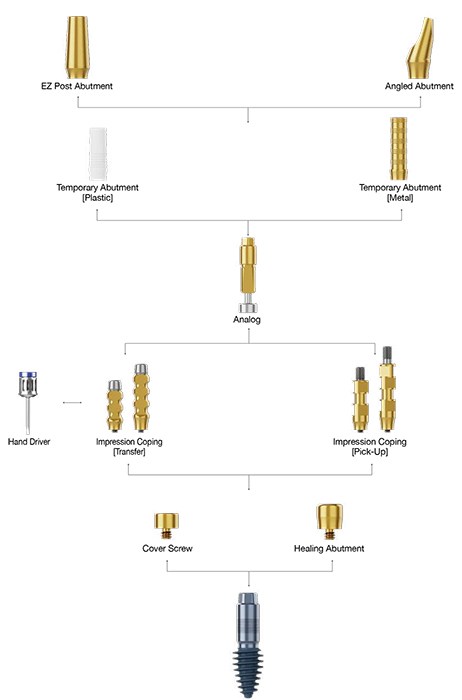





Is the Multi-Unit Abutment (MUA) still the best prosthetic option for full-mouth implants?
A Game-Changer for Edentulous Cases:
Overcoming Bone Limitations with ARi, BD, and BD Cuff
The BlueDiamond, BD Cuff, and ARi solutions offer a new concept and approach that adapt to bone anatomy (nature), reducing surgical complexity and ensuring predictable results and long-term stability, even in thin and defective ridges, without the need for excessive bone grafting.
Innovation in edentulous implant solutions!
With the development of ARi, BD, and BD Cuff implants, full-arch implant placement has evolved to overcome the limiations of bone quantity and distribution. These systems enable optimal implant positioning based on even force distribution, rather than being constrained by the existing bone conditions.
But once the implants are placed, the next critical question arises – how should the prosthetics be designed?
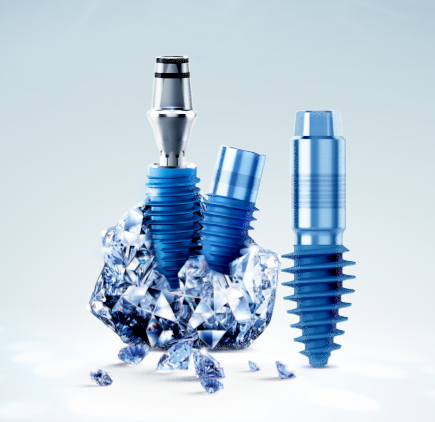
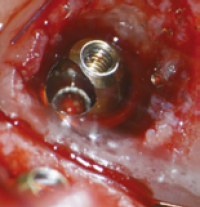
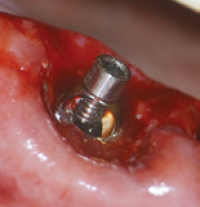
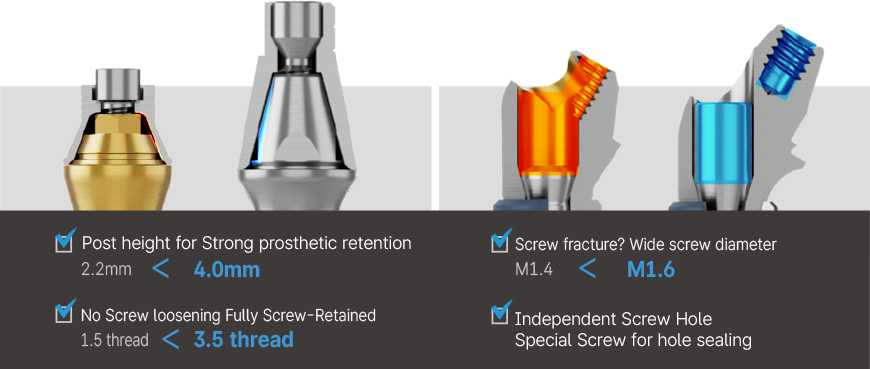
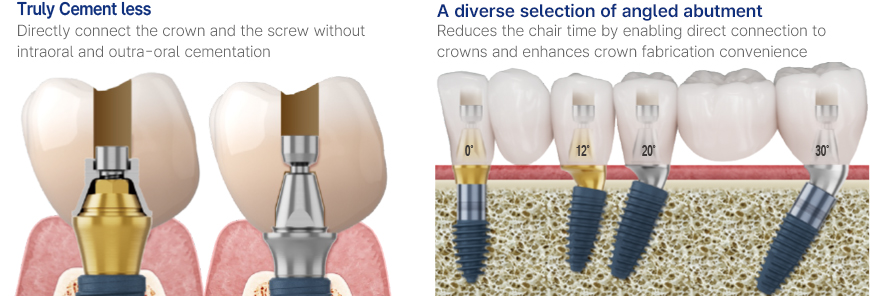
We have developed a new optimized abutment system with a special design to overcome the limitations of the existing MUA.
For years, the industry standard for All-on-4 and full-arch restorations has been the Multi Unit Abutment (MUA), which helps correct implant angles placed at varying inclinations. However, MUA has some inherent weaknesses:
- · A small contact area between the abutment and the final prosthesis, compromising long-term stability
- · Narrow-diameter prosthetic screws, which increase the risk of screw loosening and fractures over time.
Redefining Prosthetic solution for full-mouth implants:
Optimized abutment system,
designed to overcome the limitations of MUA
AXA is a new advanced abutment system specifically designed to ensure:
- · A stronger connection
- · Greater load distribution
- · Improved longevity

By combining anatomically adaptive implant placement with a structurally enhanced abutment system, AXA is the ideal solution for modern edentulous cases, offering improved prosthetic stability and better long-term outcomes
VD determination and treatment planning for edentulous patients are complex and difficult?
Beyond the Dental Avatar: From Static to Dynamic Dental Avatar
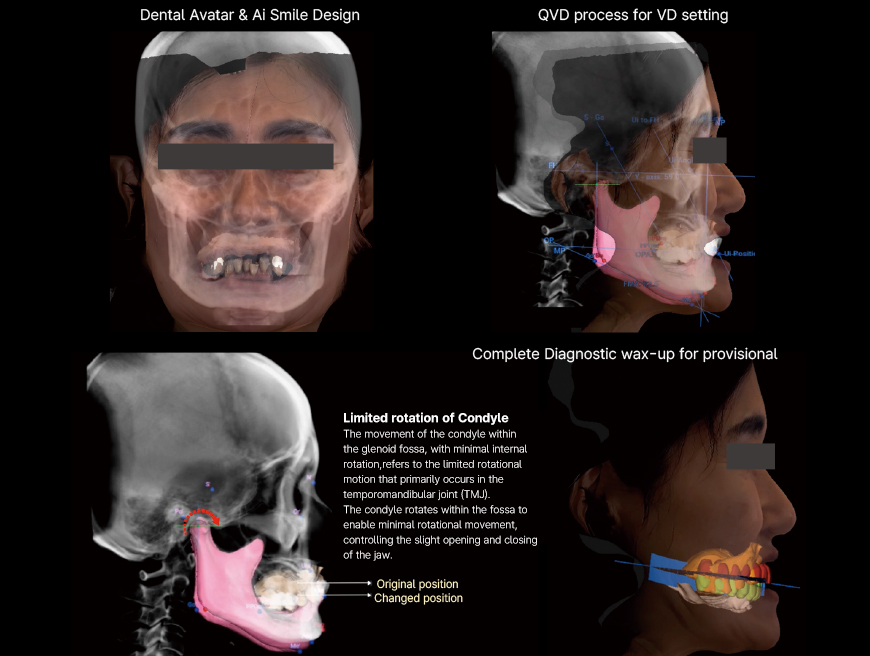
By overcoming the two-dimensional limitations of traditional Digital Smile Design (DSD), Dental Avatar by revolutionized esthetic analysis by integrating face scans and intraoral scans, setting a new standard for digital treatment planning. In 2019, MegaGen advanced this concept with R2Studio, which combines face scans, CBCT, and STL data to create a fully integrated workflow from treatment planning to CAD/ CAM fabrication. This innovation enabled comprehensive treatment planning for edentulous patients.
Still involves complex manual VD determination and external CAD software fore diagnostic wax-ups.

In 2022, the QVD, developed with R2Studio Q and R2 AI technology, streamlined the process by eliminating the need for manual VD determination and complex CAD manipulation.
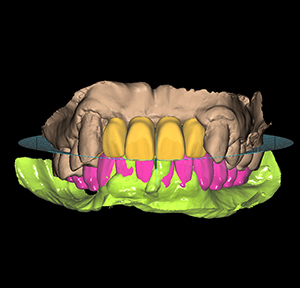
QVD integrates CBCT, face scan, and intraoral scan data, simplifying the workflow from consultation to provisional restoration. It automatically determines the ideal VD using smile analysis and CBCT evaluation. The system also establishes the 3D positional relationship between the maxillary and mandibular STL files to plan optimized implant placement and prosthetic design.
By the second visit, implant surgery is performed, and the temporary restoration is delivered, enabling oneday implant treatment.
Redefining a new chapter for full-mouth implants:
Until now, such a perfect protocol has never existed!
Any edentulous case : Surgery & temporary in 2 visits!
QVD: A New Approach to Full Mouth Workflow with R2StudioQ
Treating edentulous patients traditionally involves complex diagnosis and treatment planning. Key factors such as midline, maxillary central incisor position, smile line, vertical dimension (VD), and occlusal plane must be accurately communicated to dental technicians, but this process is often time-consuming and prone to errors. Traditional methods depend on bite wax rims and clinical adjustments, making them imprecise and reliant on clinician skill.
Digital Approach with R2 QVD Solution
The R2 QVD system integrates facial scan data, CBCT, and intraoral scans to create a 3D virtual model (Dental Avatar). This system allows precise determination of critical parameters like midline, smile line, anterior tooth positioning, VD, and occlusal plane. By automatically analyzing Y-axis and mandibular base angles, it proposes an optimal VD based on the patient’s anatomical structure, speeding up the treatment process and ensuring accurate planning.

Digital Protocol for an All-on-X Treatment Plan
For a 53-year-old female patient with missing maxillary anterior and mandibular posterior teeth, the R2 QVD system enabled a more precise All-on-X treatment plan. By determining midline, central incisor positions, and VD, it simplified the treatment workflow and improved the functional and aesthetic outcomes compared to traditional methods.
QVD All-on-X: A digital solution for precision and predictability
This All-on-X treatment utilized the QVD solution for precise digital analysis, ensuring optimal implant positioning and occlusal alignment. The Stackable Guide and AXA abutments ensured surgical accuracy, resulting in a full zirconia, screw-retained prosthesis. The approach delivered functional, aesthetic, and psychological benefits, setting a new standard for full-mouth digital dentistry.
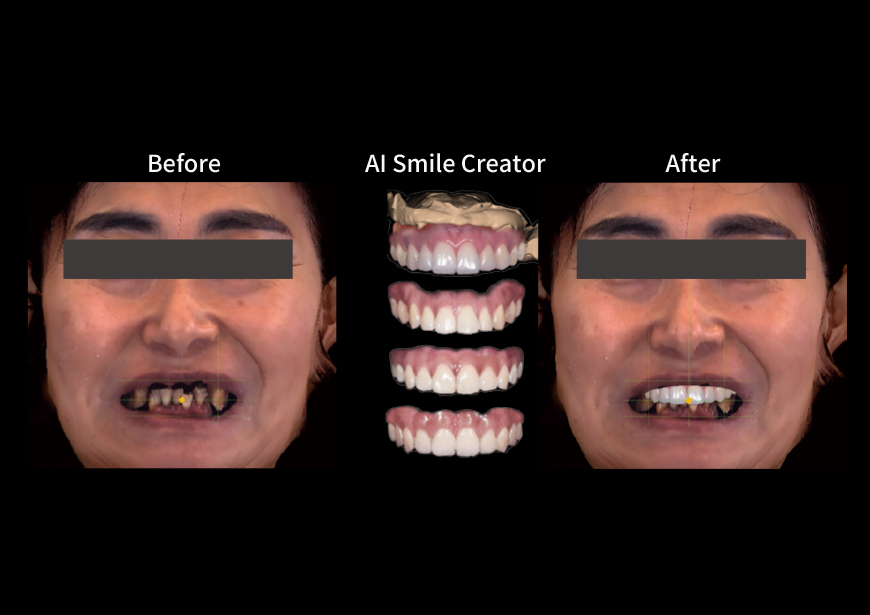
1. Patient Consultation and Data Acquisition
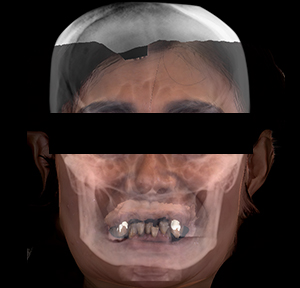
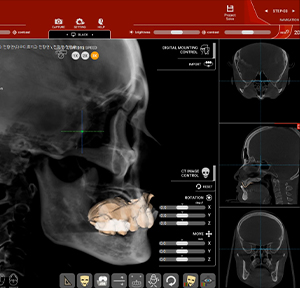
Smile Line Analysisand Treatment Planning Through Patient ConsultationThe patient's midline and smile line were analyzed with AI Smile Creator, positioning the maxillary anterior teeth. The oval tooth library was selected for a harmonious result. CBCT and intraoral scan data were acquired using R2Studio Q, eliminating recording bases. The R2 QVD solution streamlined the workflow, reducing visits and speeding up treatment planning.
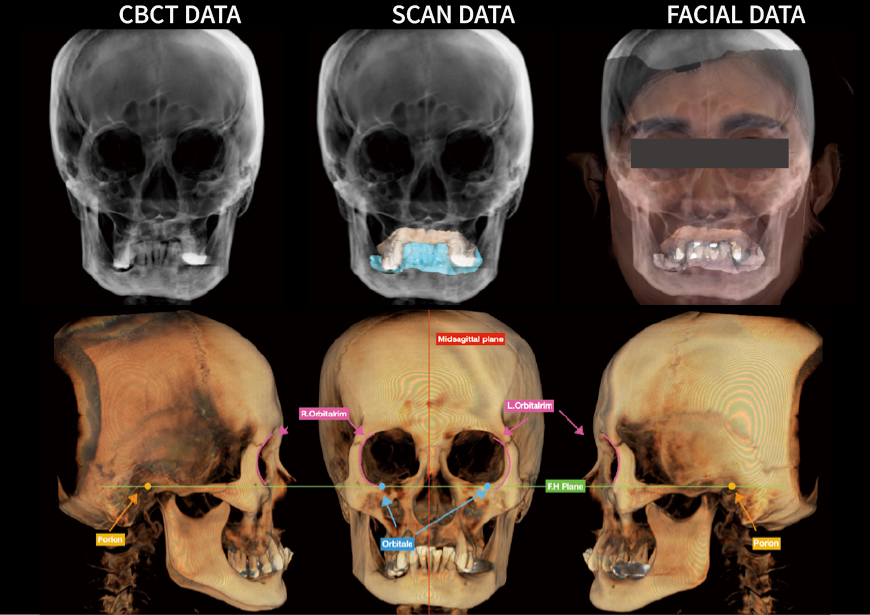
2. Precision Diagnosis and Digital Analysis Using Dental Avatar
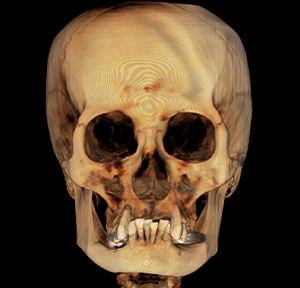
The Dental Avatar integrates facial scan, intraoral scan, and CBCT data into a 3D model for precise anatomical analysis, ensuring accurate diagnostics and harmonious occlusion and aesthetics.
Enhanced Data Alignmentand Diagnostic Accuracy Through CBCT ReorientationAI-assisted CBCT Reorientation corrects misalignments along Yaw, Roll, and Pitch axes for optimal positioning.
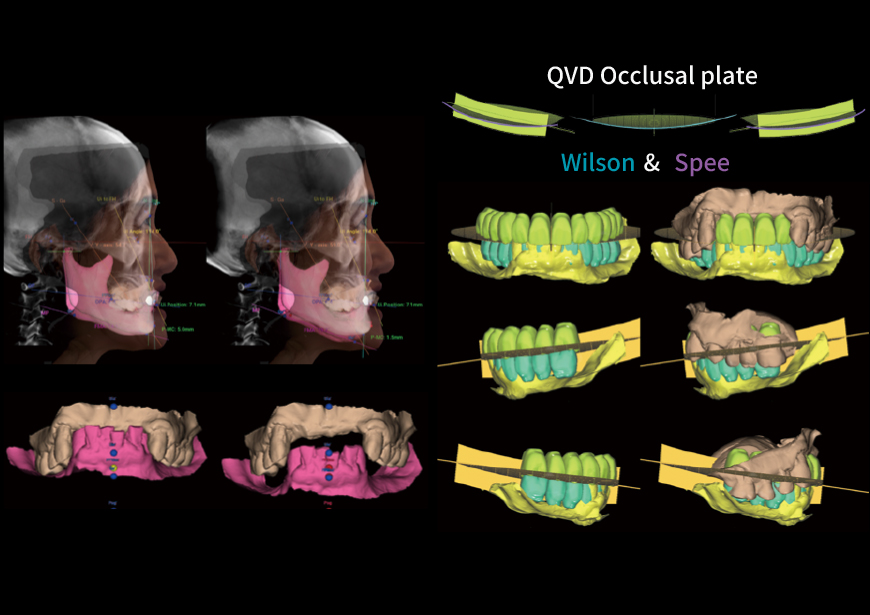
3. Vertical Dimension Adjustment using QVD
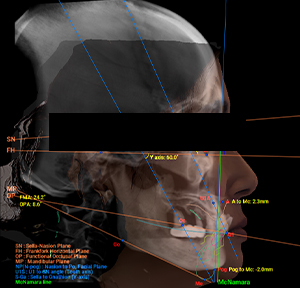
- • CBCT analysis: Overcomes 2D limits, evaluates skeletal, soft tissue, and occlusion.
- • AI analysis: Speeds up process, reducing manual landmarking
- • Smile Creator: Adjusted maxillary central incisor to 4-6mm from McNamara Line.
- • VD: Set at 54.2°, gradually adjusted.
- • Occlusal plane: Based on Curve of Spee/Wilson, adjusted for stability.
- • Archform: Ovoid with slight tooth mods.
- • Result: Balanced plane, improving function and aesthetics.
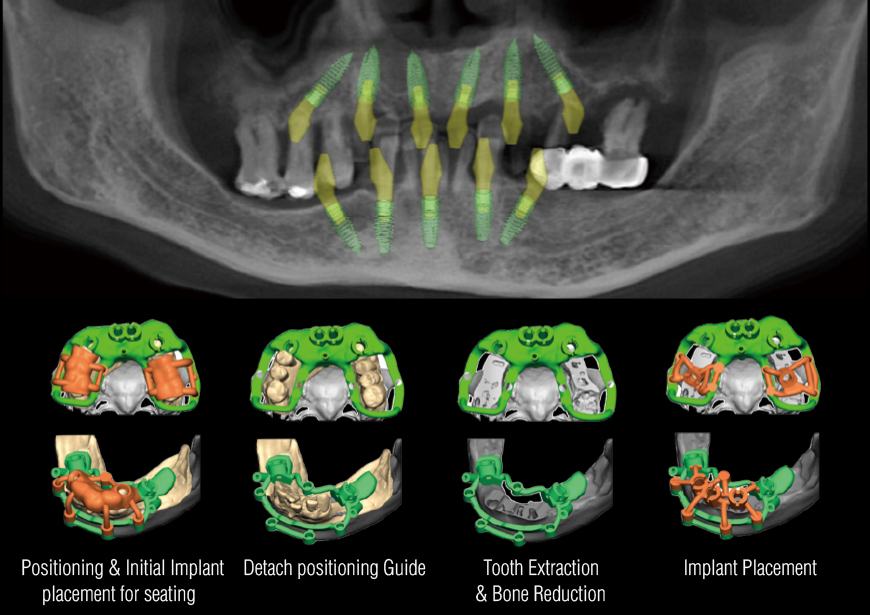
4. R2GATE planning and Guide Design
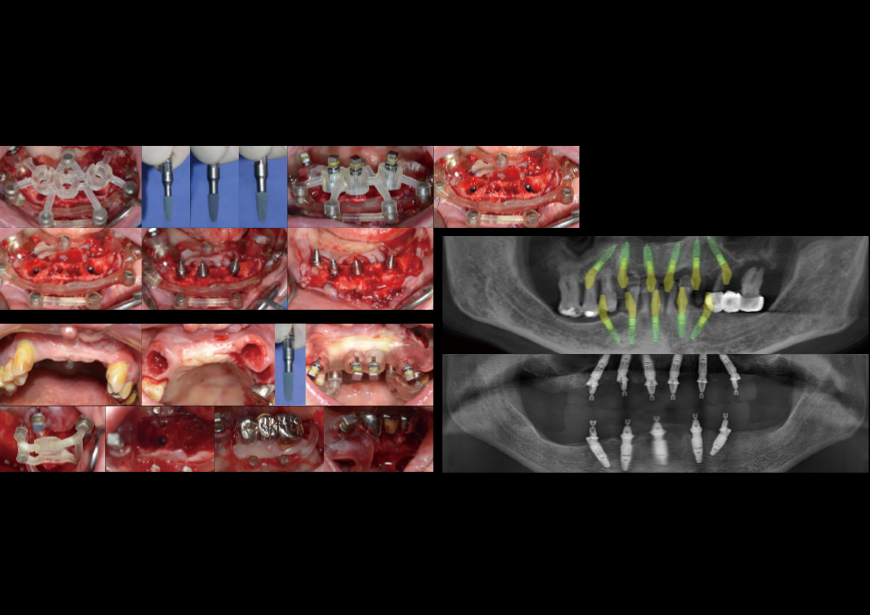
6 BlueDiamond implants with AXA abutments were placed in the maxilla and 5 in the mandible using an All-on-X design. Implants were angled for stability, avoiding sinus augmentation and utilizing existing bone, minimizing complications and evenly distributing occlusal forces.
A stackable guide was used for partial bone reduction ensuring accurate implant placement and easy reattachment. It marked the resection level, featured a magnetic connection for smooth adjustments, and enhanced workflow efficiency and predictability.
5. The All-on-X implant surgery using a Guide and AXA Abutments
The All-on-X implant surgery started with the mandible using a stackable guide and AXA abutments. After extracting the teeth, implants were placed with bone reduction for precision. The same procedure was followed in the maxilla, with posterior implants at 30 degrees and anterior ones at 20 degrees, ensuring proper abutment alignment and stability.
Post-surgery panoramic imaging confirmed that the implants were placed with high accuracy, closely matching the surgical plan. The R2 Guide system ensured precise implant positioning and stability.
The planned angulation of both posterior and anterior implants was successfully executed, optimizing the AXA Abutment positioning and maximizing prosthetic stability, leading to improved long-term prognosis.
6. The Key to Transforming a Patient’s Emotions
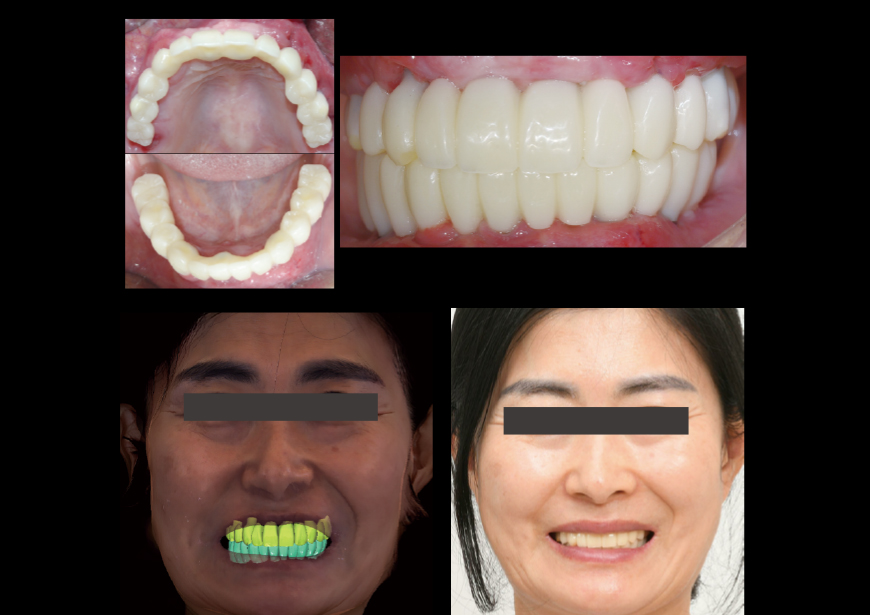
The provisional crowns were delayed by two weeks, but once placed, the Facial Analyzer confirmed proper positioning, maintaining VD and aligning the central incisors, occlusal plane, and smile line. The QVD solution restored the occlusal vertical dimension, improving TMJ adaptation and occlusal stability. This resulted in a notable psychological transformation, enhancing the patient's confidence and comfort.
During the provisional phase, the patient requested slimmer, more feminine teeth. This was reflected in the final crowns by refining the anterior teeth to suit the patient's facial structure. A full-zirconia, screw-retained prosthesis with a refined incisal contour was created, and the patient’s response was highly positive. The All-on-X treatment allows functional adaptation with provisional crowns and precise aesthetic refinements based on patient feedback.