





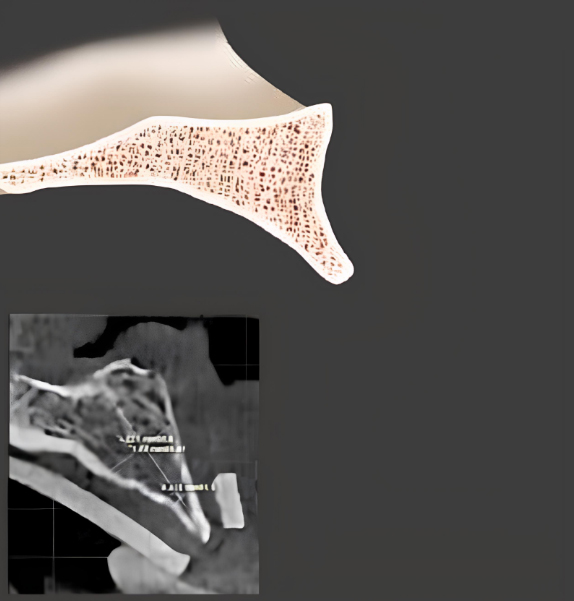
Check total length (cuff + thread length) of implant that can be placed using panoramic picture.
Ex) 13mm~
ARi®, the 4th generation implant
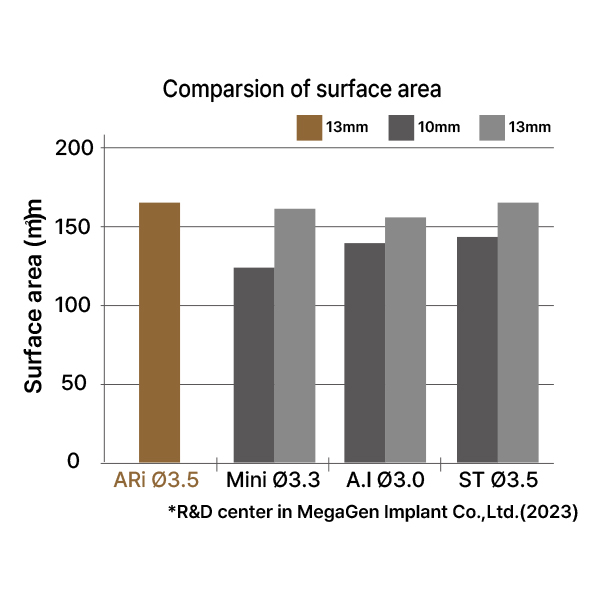
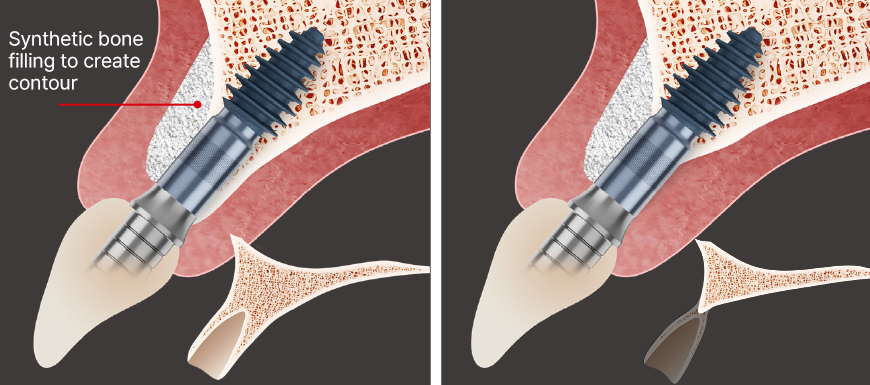
ARi® is a special implant design that acquires strong stability and osseointegration from the unresorbed basal bone instead of an atrophied alveolar bone. The implant body design is also more effective for post care, and long-term stability can be secured without concern, even if the alveolar bone is lost.


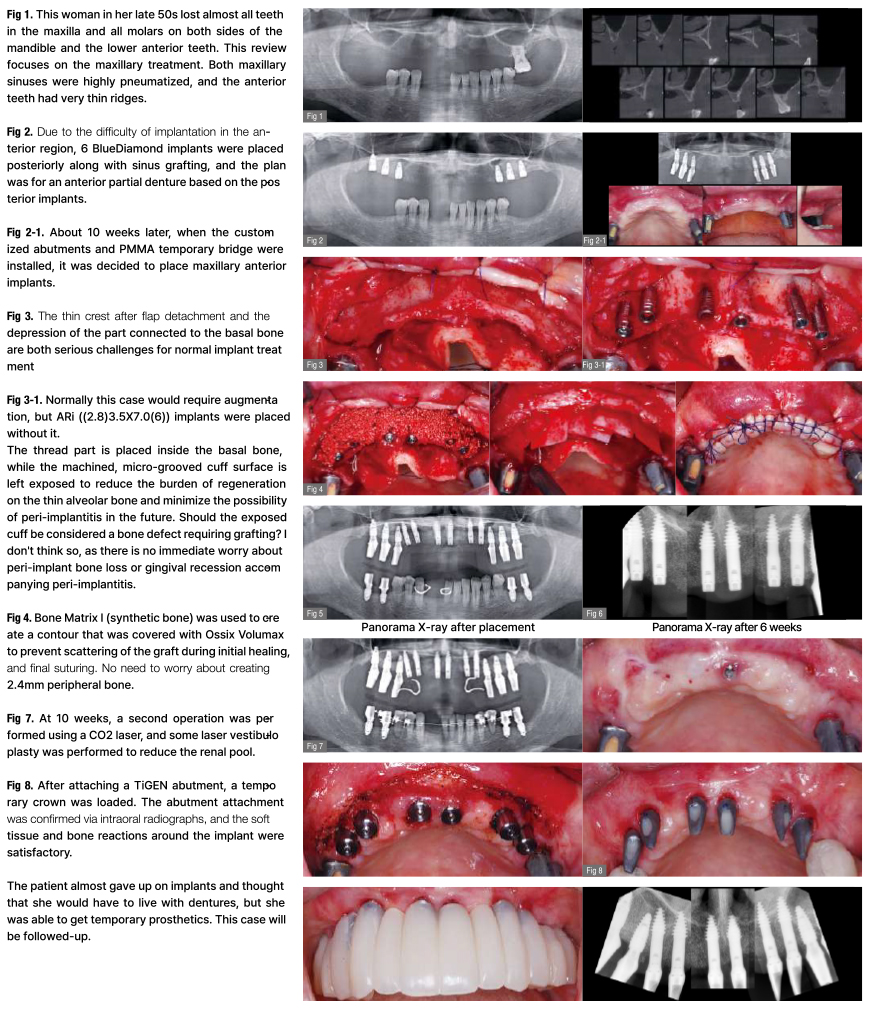
Is it possible to place implants in such an anterior atrophic thin ridge?
In this difficult case, a long pontic area is usually created in the anterior part.
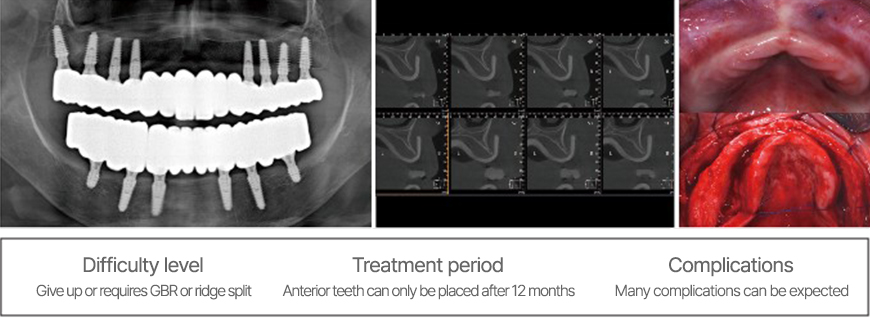
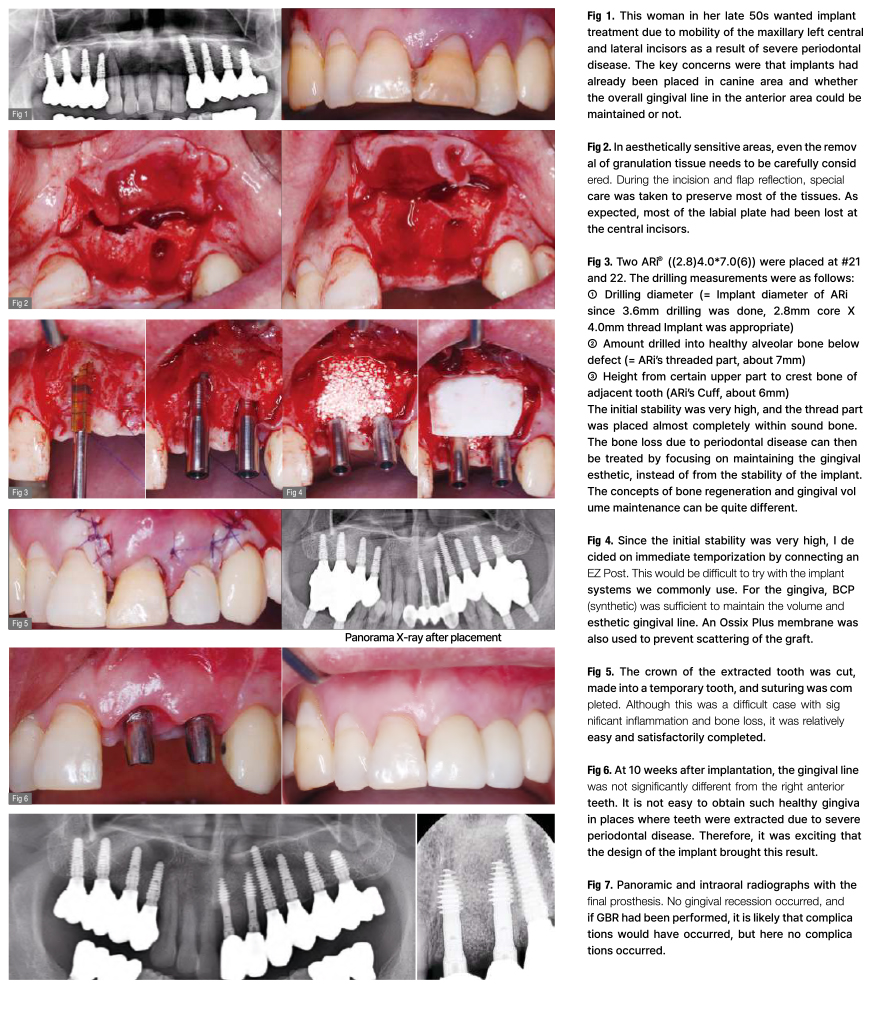
Very serious case of periodontitis, large defect with no bone, no labial plate, plus vertical bone loss. Can implants be placed?
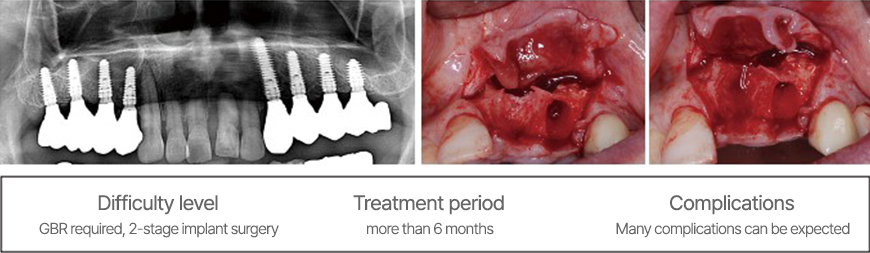
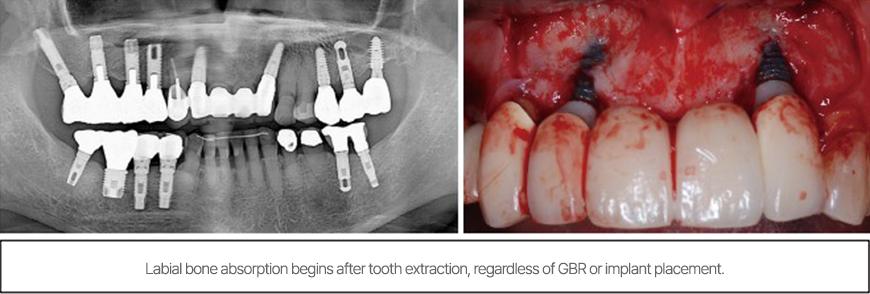
Implants were placed after regeneration, but recession occurred 10 years after placement due to ridge resorption following extraction. There are so many cases like this.

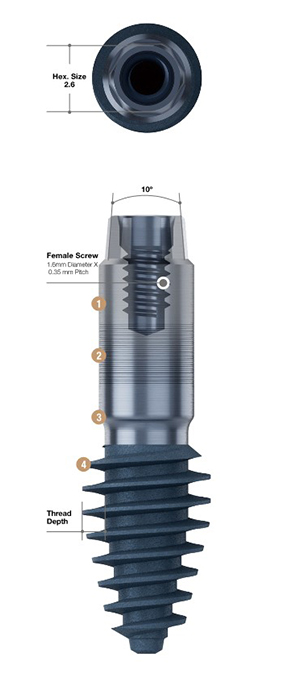
KnifeThread® located in basal bone zone guarantees higher ISQ value immediately after implantation.
The application of MegaGen's special Deep & KnifeThread® design secures a high initial stability, even in the basal bone, immediately after implantation. It also increases resistance to compressive force while minimizing the occurrence of shear force.
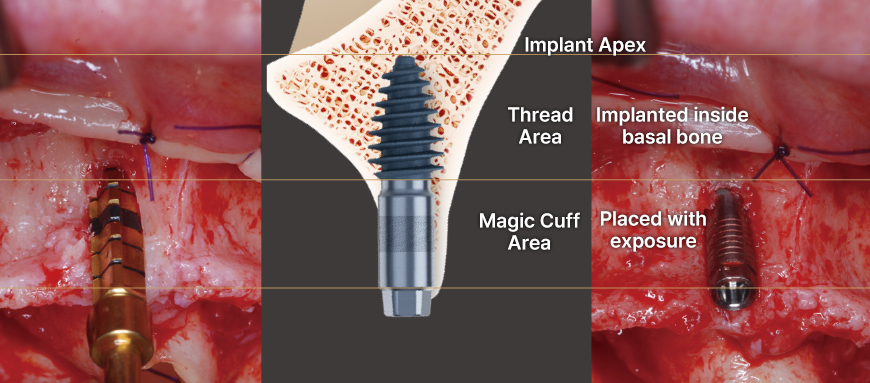
The thread section with XPEED® surface treatment, which is implanted in the non-degenerated basal bone, maintains stable strong osseointegration, ensuring long-term implant stability even if the alveolar bone is lost.

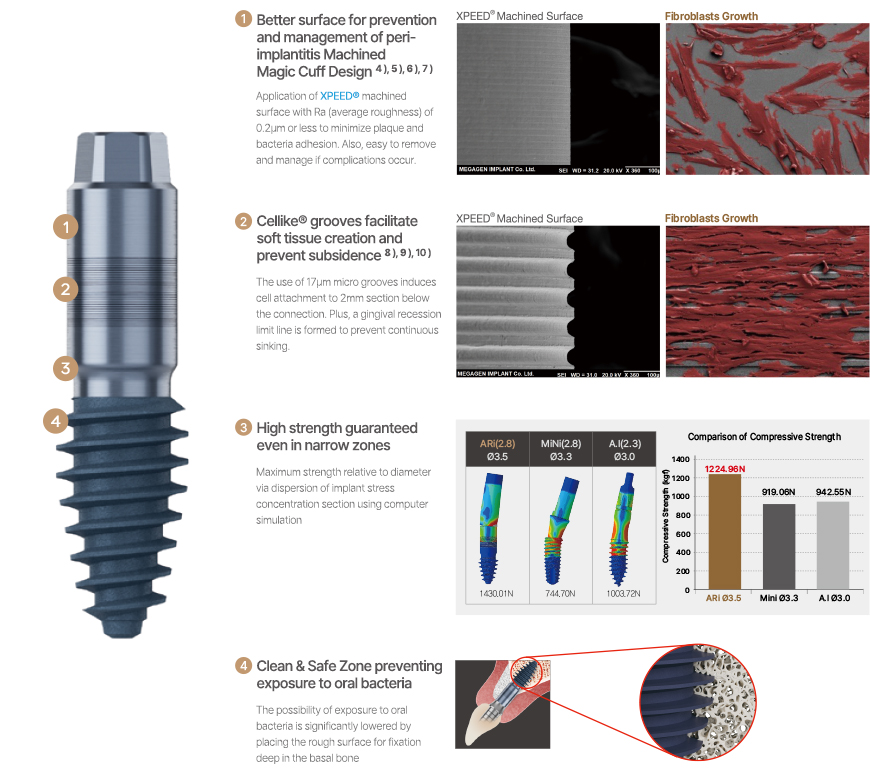
To promote secondary stability, all BLUEDIAMOND IMPLANT® have a special extra surface coating called Xpeed. This unique hydro-thermal incorporation of calcium ions has already been proven to activate osteoblasts and accelerate osseointegration, essential for secondary stability.4,5
Plus, Xpeed provides an important quality check to avoid any acid residue (BLUE means NO acid residue!)
The unique implant design supports cell adhesion, prevents continuous subsidence, averts complications such as peri-implantitis and fracture issues that can occur after restoration, and is easy to remove even when peri-implantitis occurs.
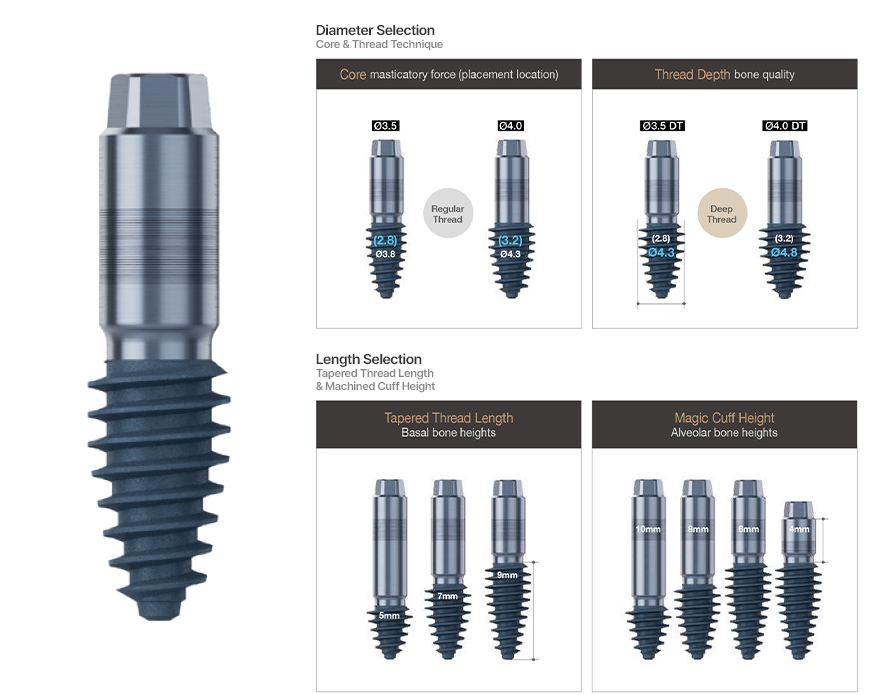
ARi® provides various options depending on the masticatory force (placement location), bone quality, and length of the basal bone and alveolar bone, enabling stable implant placement in any situation.
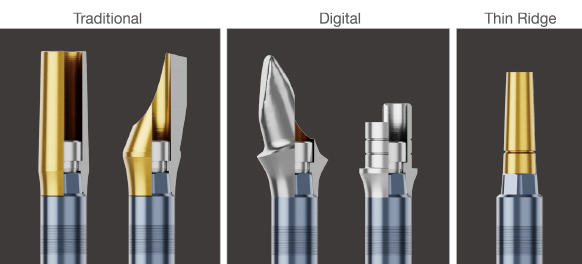
The 10° external conical hex provides a strong bond with the abutment, facilitating conventional, digital, and thin ridge prosthetic options.
Check total length (cuff + thread length) of implant that can be placed using panoramic picture.
Ex) 13mm~

Measure height of 5 mm thick point of alveolar bone using bone calipers. Measured height is cuff height. Ex) 6mm / Total 13mm (Cuff Length 6mm+Thread Length 7mm)

Use lance drill to drill parallel to palatal bone wall to prevent defects in labial direction.
Ex) 13mm

Check path and depth of drilled hole using direction indicator.
Ex) 13mm

If path of drilled hole does not match, use Lindermann Drill to adjust path.

If bone interference is anticipated for healing abutment or final prosthesis, remove this bone using profile drill.
Ex) Drilling depth: Marking line

Perform drilling sequence until final drill.
Ex) 13mm / Ø2.5 drill → Ø2.9 drill (Ø2.9 direction indicator) → sequential drilling until final drill

Place implant using handpiece connector.
Ex) Place up to interface between implant and mount.
* Recommended torque: 45cm Less than 80Ncm when using ratchet connector

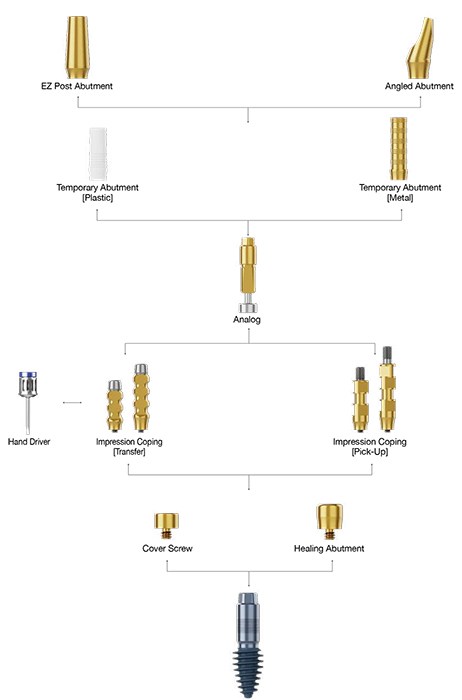
Remove mount and attach healing abutment or cover screw.
*If reinforcing gingiva volume is needed, add bone grafting material.